
How Association Leaders are Dealing With Visa Delays, Funding Cuts, and Political Headwinds
Skift Take
Uncertainty looms large in the events industry, but association leaders are finding ways to adapt, even as attendance remains soft.

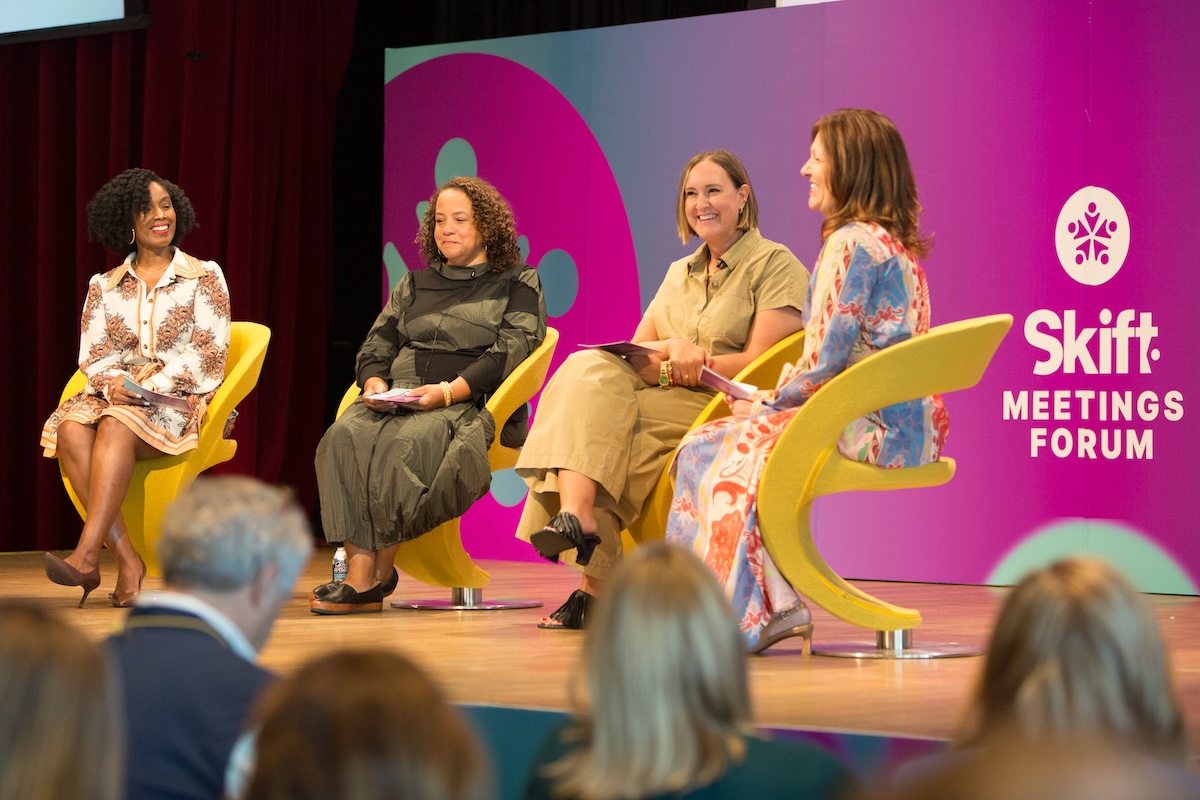
At Skift Meetings Forum 2025, three association executives shared how they are dealing with the mounting uncertainty impacting their events.
The American Alliance of Museums may be a 120-year-old organization, but it can’t rest on its laurels, said Marilyn Jackson, president and CEO of the organization.
“We can’t assume people will come just because we’re the largest museum conference in the world,” said Jackson. “What I'm really pushing the team on is we need to make sure that we're building a conference that has a lot of value for the attendees. What is our value proposition? What are people going to get out of it?”
Jeanine Kelly, senior director, event operations, ICSC, formerly the International Council of Shopping Centers, is rethinking formats altogether. “Things that were seven-day events, maybe they’re three now,” she said.
In addition, Kelly has launched new experiences tailored to younger professionals.
"A lot of what we've seen is them focusing on more engaging, tactile events, less focus on drinking and happy hour events and more daytime and morning events. They have very clear boundaries on their work and personal time. We're doing pickleball tournaments now at 9 a.m., instead of 7 p.m. happy hour events.”
Jackson agrees. “Keep evolving your conference. Don’t let it get stale. Understand how different generations want to learn and meet them where they are.”
Political Impacts on Association Meetings
Carine DesRoches, meetings and events director at the National Kidney Foundation, saw international attendance at her annual meeting fall from the usual 8% to just 2%. “Approvals weren’t there, funding wasn’t there, and people were hesitant to attend,” she said.
Overall, her conference attracted 3,000 attendees, not far off from years passed, but there was a notable decline in international attendance.
She also had the most last-minute registrations she has ever had before. “We saw a really big jump in on site registration, and again, that is because of the hesitancy of individuals to register, and then late approvals as well late funding,” she said.
Kelly is experiencing the same. ”We've run over 100 events throughout the year that we have seen a softening, a hesitancy among people. There's a little spike before the event gets underway, and some on-site registrations,” she said.
For some attendees, their social beliefs will influence whether they attend a conference or not. For instance, DesRoches said the Kidney Foundation has faced pushback from attendees over events in Texas and Florida. “They’ve told us they’re disappointed because those states don’t align with their values. We work to elevate our mission and integrate local partnerships in those cities to reassure them,” she said.
Political risks extend to the stage as well. Kelly said ICSC recently had a speaker go off-script in ways that clashed with the organization’s mission. “It’s led us to institute a more robust speaker scrutiny process."