
Purpose, Participation, and the Power of Listening: Lessons From Skift Meetings Forum 2025

Skift Take
Budgets and politics may dominate headlines, but at the Skift Meetings Forum 2025, industry leaders emphasized a different measure of value: the depth of community, the inclusivity of participation, and the serendipitous moments that spark real engagement.

Nearly 300 event leaders convened Monday at the Skift Meetings Forum 2025, confronting the uncertainty, stress, and shifting politics that define the industry today. Half the room had more than 20 years of experience, while close to 200 were senior planners running events of more than 5,000 participants and managing budgets that top $5 million.
Polls revealed what weighs heaviest on the audience: budgets first, global politics close behind. Time scarcity, rising stress, and limited resources were also constant themes. Asked about the broader economic and geopolitical picture, some admitted to uncertainty and strain, while others leaned into optimism, describing themselves as fortunate and even hopeful.
The agenda mixed formats from candid one-on-one interviews to sharp three-person panels, along with small-group discussions over lunch. Each format gave participants different ways to candidly connect with ideas, people, and business.
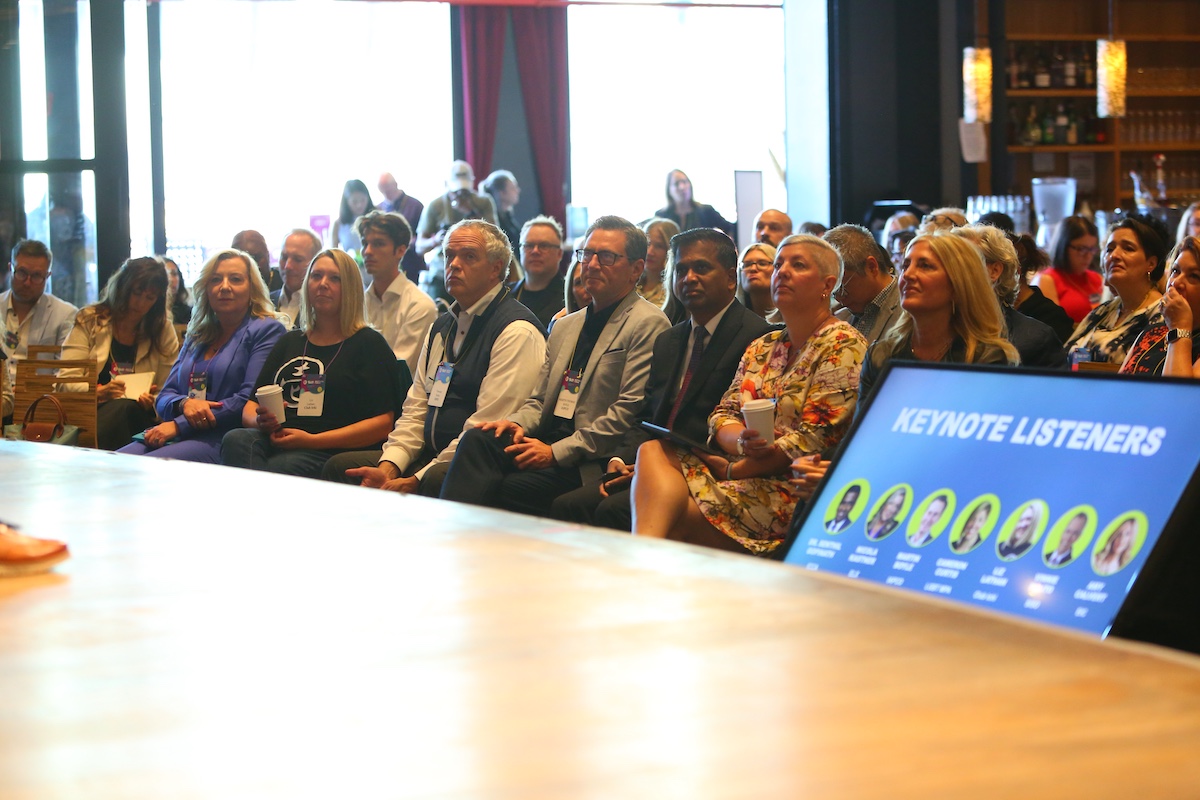
The Forum concluded with insights from Keynote Listeners, a select group asked to absorb the day’s conversations and translate them into actions for their communities. Their reflections pointed toward a future of more purposeful, human-centered events.
Dr. Senthil Gopinath, CEO of the International Congress and Convention Association (ICCA), argued that community is not just a theme but the backbone of events. He pointed to ICCA’s upcoming congress in Porto, which will be spread out across the entire city, weaving local culture and community into the program.
Nicola Kastner, CEO of the Event Leaders Exchange (ELX), looked to the industry’s resilience, forged through downturns and the pandemic. Resilience, she said, depends on community and consistent engagement, not just flagship gatherings. Her pledge was to double down on member value by acting on feedback.
Martin Boyle, CEO of the International Association of Professional Congress Organizers (IAPCO), reframed attendees as “participants” to stress active engagement. True value, he said, begins with asking why people gather and shaping content around that. He committed to bringing this into IAPCO’s training, even reshaping sessions on the fly when needed.
Cameron Curtis, CEO of the LGBT Meeting Professionals Association (LGBT MPA), urged intentionality and inclusivity. Her reminder: slow down and anticipate unspoken needs. She cited practices such as photo-free zones to protect privacy for those not publicly out, and ally memberships to broaden inclusion. Her commitment was to keep adapting to create safe and creative spaces.
Liz Lathan, co-founder and chief community officer of Club Ichi, issued a sharper challenge. Conversations about creativity and authenticity have echoed for decades, she said, but the task now is to move from talk to action. She called for leaders to take ideas back to their companies and events, build task forces, and put plans into motion.
Vincent Polito, CEO of the Society of Independent Show Organizers (SISO), highlighted the value of orchestrating serendipity and leaving white space. Even SISO’s senior executives, he said, benefit from play and informal moments. He committed to designing more of these opportunities while resisting the urge to over-program.
Amy Calvert, president and CEO of the Events Industry Council (EIC), closed with a call for presence. Too often, leaders multitask their way through events, she said. Her focus is to help leaders and their communities show up fully, intentional, inclusive, and grounded in trust.
Budgets, business and pressure will always shape events. But the leaders in that room argued the industry’s future will be built on something harder to measure: purpose, presence, and community.