
7 Ways Next-Gen Attendees are Reshaping Event Tech

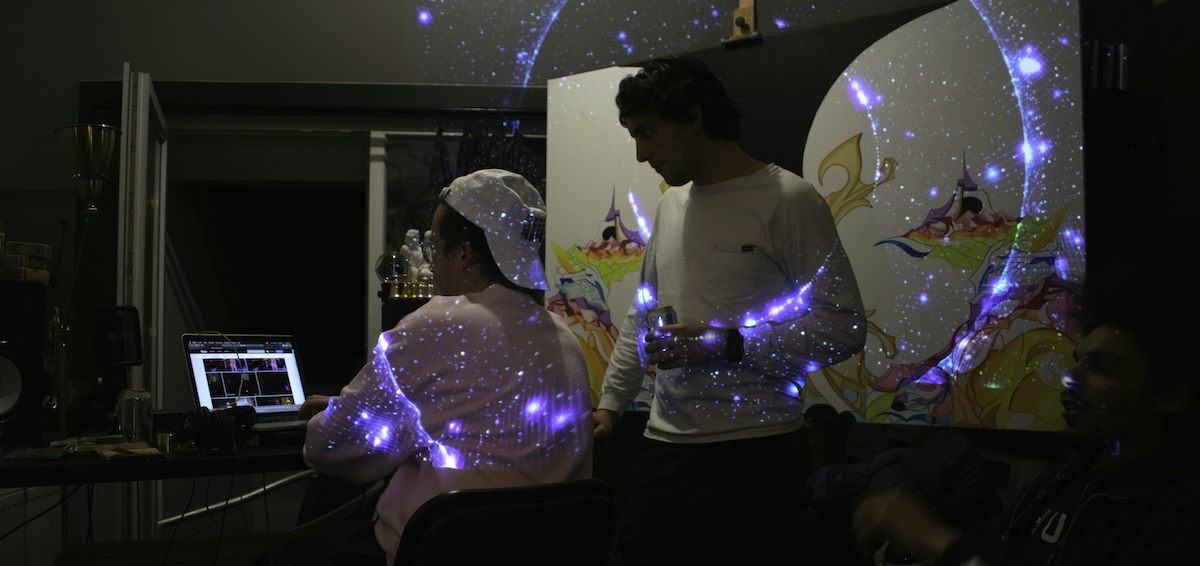
Photo Credit: Unsplash / Brecht Corbeell
Skift Take
Planners need to rethink how they use technology in every aspect of their meetings, or they risk losing the attention of the biggest percentage of their attendees — Millennials and Gen Zers.

Planners are rethinking every aspect of meeting tech, from registration to reservations, apps to entertainment, with their younger attendees in mind. The evolution of these 7 technologies is transforming planners’ jobs and their meetings.
1. Registration Tech
If there’s anything that will turn off a younger attendee, it’s a glitchy online registration system, or, once they arrive at the meeting, waiting in a long queue for no apparent reason.
Improved registration technology has simplified the process. On site, self-registration or tablet tables allow staff to take on a more passive role as attendees sign themselves in. All that’s needed is a fast badge-printing system and a single station for badge and material pick-up, such as lanyards and ribbons. This transforms registration from a painful experience into an opportunity to engage with other attendees and start the event on a positive note.
2. Travel Booking
It used to be considered a privilege by incentive winners to have their flights booked for them, concierge-style. Not so for the younger generations: They prefer to have a travel voucher they can use to book their flights on their own, on whichever app and airline they choose. They also want control of their reservations so they can extend their trips and work remotely in that beautiful incentive destination, rather than jetting straight home.

3. Audience Polling
The idea of a session where people are talked down to by the person on stage is a yawn for younger audiences. “They don't want to see people like us talking to you. They actually want to be involved in the conversation,” Sherrif Karamat, CEO of PCMA, told the audience at last year’s Skift Meetings Forum.
A growing number of events are using live polling to encourage audience participation. The key to successful polling is to form questions that will intrigue your attendees, make the instructions very clear so that your attendees know what they are supposed to do, and allow them enough time to think before voting. Commenting on the results creates a dialog between the speaker and the audience.
In addition to encouraging participation, polling questions can help planners quickly understand how their content is resonating and make real-time adjustments.
4. Facial Recognition
Closed-circuit television (CCTV) cameras are everywhere these days, including in conference rooms. Some are being used to recognize and track attendees (known as facial recognition), while others are analyzing the entire group to measure their engagement in the sessions.
While there used to be more objections to this technology, it is generally accepted among younger attendees. However, it is still important to let people know ahead of time that you are using the technology, to ward off any liability from a privacy or security perspective.
5. Gamification
Younger generations have grown up with gaming consoles in their living rooms. Gamification activates the desire to achieve something and be recognized for it. It also touches on the need for “status” among peers and gives attendees a new challenge. All of these are something younger attendees know well.
So it’s a natural to include gaming in meetings to get attendees to partake in activities they may not otherwise be inclined to do, like visiting a booth on the far end of an exhibit hall or connecting with new people they have not met before.
6. Interactive Entertainment
Younger attendees have also grown up in the world of immersive art events like Artechouse and Superblue, and even viewed the masters like Van Gogh and Monet electronically. Immersive experiences like Meow Wolf, which blends art, storytelling, and technology as visitors explore new worlds, have shaped their view of entertainment.
Meetings can also wow attendees by using projection mapping, which transforms everyday objects like walls, buildings, and stages into dynamic, immersive displays. Whether it is subtle lighting effects or massive 3D video installations, projection mapping creates the same effect as these other immersive entertainment experiences — just at a meeting.
7. AI
A recent McKinsey survey found that Millennials are the most active generation of gen AI users. Some 62% of employees aged 35 to 44 report high levels of expertise, compared with half of 18- to 24-year-old Gen Zers and 22% of Baby Boomers over 65.
For Ginger Taylor, assistant director-leadership at Leadhership Network for Women at Arc, AI is a kickstarter — the first step in her creative process.
ChatGPT has become one of her go-to tools. “I’m completely self-taught. I didn’t take a course or follow a step-by-step manual. I just started using it, learned as I went, and I’m still learning. That’s the beauty of it.
“I use ChatGPT to spark creativity, to help me think through challenges, and to kickstart the planning process,” she said. “It helps me uncover angles I might not have considered on my own.
“For me, ChatGPT is part of the bigger process: strategy, research, innovation, creativity, and leadership. It doesn’t replace the work, it enhances it.”